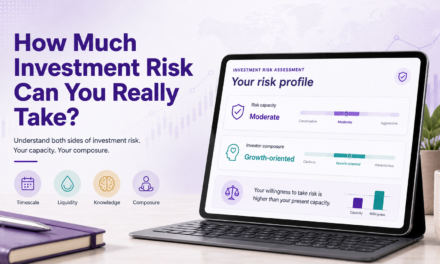
One of the first questions new investors ask is: how much should I put in? The good news: there isn’t a single “right” number. The answer depends on your goals, your budget, and how comfortable you are tying money up for the long term.
Here’s how to think about it step by step.
1. Start with your foundations
Before deciding the “how much,” make sure you’ve already built the basics:
- Emergency fund: 3–6 months of expenses in cash.
- High-interest debt: cleared, or at least under control.
Investing comes after these steps, not before.
2. Work out what you can afford
Think of investing as “future money” and budgeting as “today’s money.” Once bills, essentials, and a little fun are covered, see what’s left over.
- Many people start with £50–£100 a month.
- Others prefer a lump sum when they get a bonus or inheritance.
- The key is consistency—regular investing is more powerful than the exact amount.
3. Match your investment to your time horizon
Ask yourself: when will I need this money?
- Short-term (0–5 years): Keep money in cash.
- Medium-term (5–10 years): You can invest, but maybe stick to a balanced mix.
- Long-term (10+ years): More growth-focused investing makes sense.
The longer the horizon, the more your money has time to recover from ups and downs.
4. Think in percentages, not pounds
Instead of asking “How much?”, ask “What percentage of my income can I set aside?”
- A common starting point is 10–15% of income towards saving and investing combined.
- If retirement is your focus, the rule of thumb is: save half your age as a % of income. (So at 30, aim for 15%; at 40, aim for 20%.)
Don’t worry if you can’t hit these numbers now—small steps compound over time.
5. Don’t forget tax wrappers
Where you put your money matters:
- ISAs: Up to £20,000 a year, tax-free growth and withdrawals.
- Pensions/SIPPs: Tax relief on contributions, great for long-term retirement saving.
Using these wrappers makes your investing go further without you needing to put in more.
6. Automate and adjust
- Set up a monthly direct debit so investing happens in the background.
- Increase contributions when you get a pay rise.
- Check in once a year to see if you can nudge the amount up.
Quick checklist
I’ve covered my short-term needs (cash + emergency fund).
I know how much I can comfortably set aside each month.
I know how much I can comfortably set aside each month.
I’m using ISAs or pensions where possible.
If you’ve ticked these off, you’ve already answered the question: you’re investing the right amount for you.
✅ Next step: Read our guide: “What Can I Invest In?” to explore your options.