Market Insight 13 December 2025
If you’ve been watching the news this week, you might be feeling a little confused.
On one hand, the headlines are gloomy. On Friday, we learned that the UK economy unexpectedly shrank by 0.1% in October, the second month of contraction in a row. Talk of a “low growth trap” and a sluggish winter is everywhere.
On the other hand, if you looked at your ISA or pension this weekend, you likely saw something very different. The FTSE 100 is hovering near record highs (around 9,650), having returned over 20% this year.
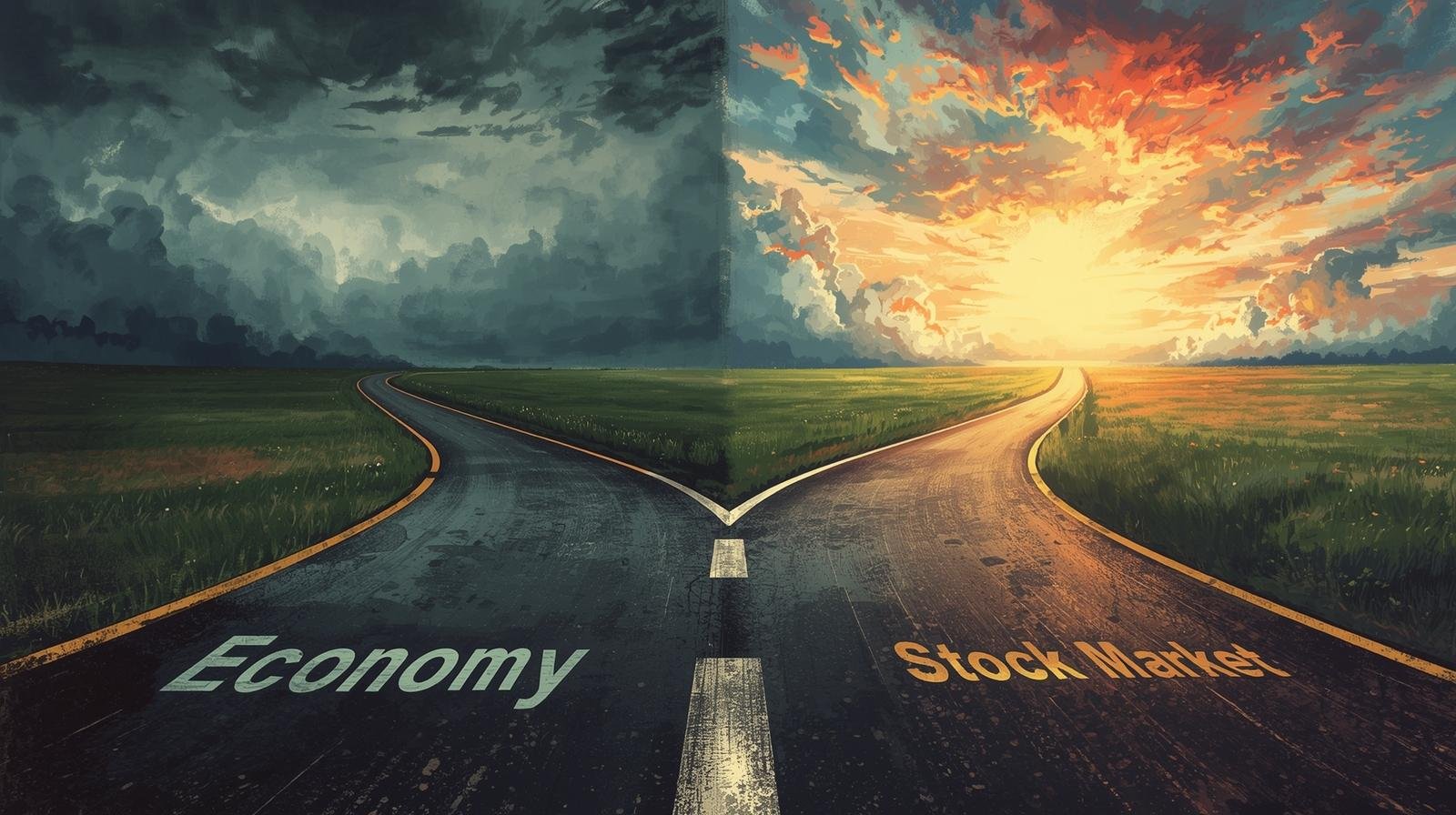
How can the stock market be booming when the economy is shrinking?
It is one of the most common questions new investors ask, and this week offers the perfect textbook example of “The Great Disconnect.” Here is why it’s happening and what it means for your money.
1. The FTSE is Not the UK Economy
This is the golden rule of UK investing. The FTSE 100 is a collection of Britain’s largest companies, but it is not a reflection of Britain’s domestic economy.
About 75% of the earnings made by FTSE 100 companies come from outside the UK.
- Shell and BP sell oil globally in Dollars.
- AstraZeneca sells medicines in the US and Asia.
- Unilever sells soap to billions of people worldwide.
When the UK economy stumbles, these global giants barely feel it. In fact, if a weak UK economy causes the Pound to fall (as it did this week), their overseas profits become worth more when converted back into Sterling.
2. “Bad News” Can Be “Good News” for Stocks
It sounds perverse, but markets often cheer bad economic data. Why? Interest rates.
When the economy is running too hot, the Bank of England keeps interest rates high to cool it down. High rates are bad for share prices because they increase borrowing costs for businesses.
However, when the economy stalls (like it is now), the Bank is forced to cut rates to get things moving again.
- The weak GDP figures this week have convinced investors that the Bank of England will likely cut interest rates to 3.75% next week (18 Dec).
- Lower rates make bonds and savings accounts less attractive, pushing more money into the stock market.
- Investors are effectively looking past the current gloom to the “cheaper money” coming in 2026.
3. Markets Look Forward, Data Looks Backward
Economic data (GDP) is like driving while looking in the rear-view mirror. The figures released on Friday told us what happened in October. That’s history.
The stock market, however, is a “forward-looking machine.” Investors are currently buying shares based on what they think profits will look like 6 to 12 months from now. With interest rates falling and global trade holding up, the market is betting that 2026 will be better, regardless of a dreary October 2025.
💡 The Lesson for DIY Investors
Don’t let “Recession” headlines scare you out of the market.
If you had sold your investments when the gloomy economic forecasts started earlier this year, you would have missed out on the FTSE’s spectacular 22% rally.
The economy and the stock market are two different beasts. By holding a diversified portfolio, you capture the growth of global companies, even when the shop down the street is struggling.
Next Week’s Watch: Keep an eye on the Bank of England decision on Thursday (18 Dec). If they cut rates as expected, this “bad news is good news” rally might have further to run.
© Clearly Investments Ltd. Educational information only. This is not investment advice.