


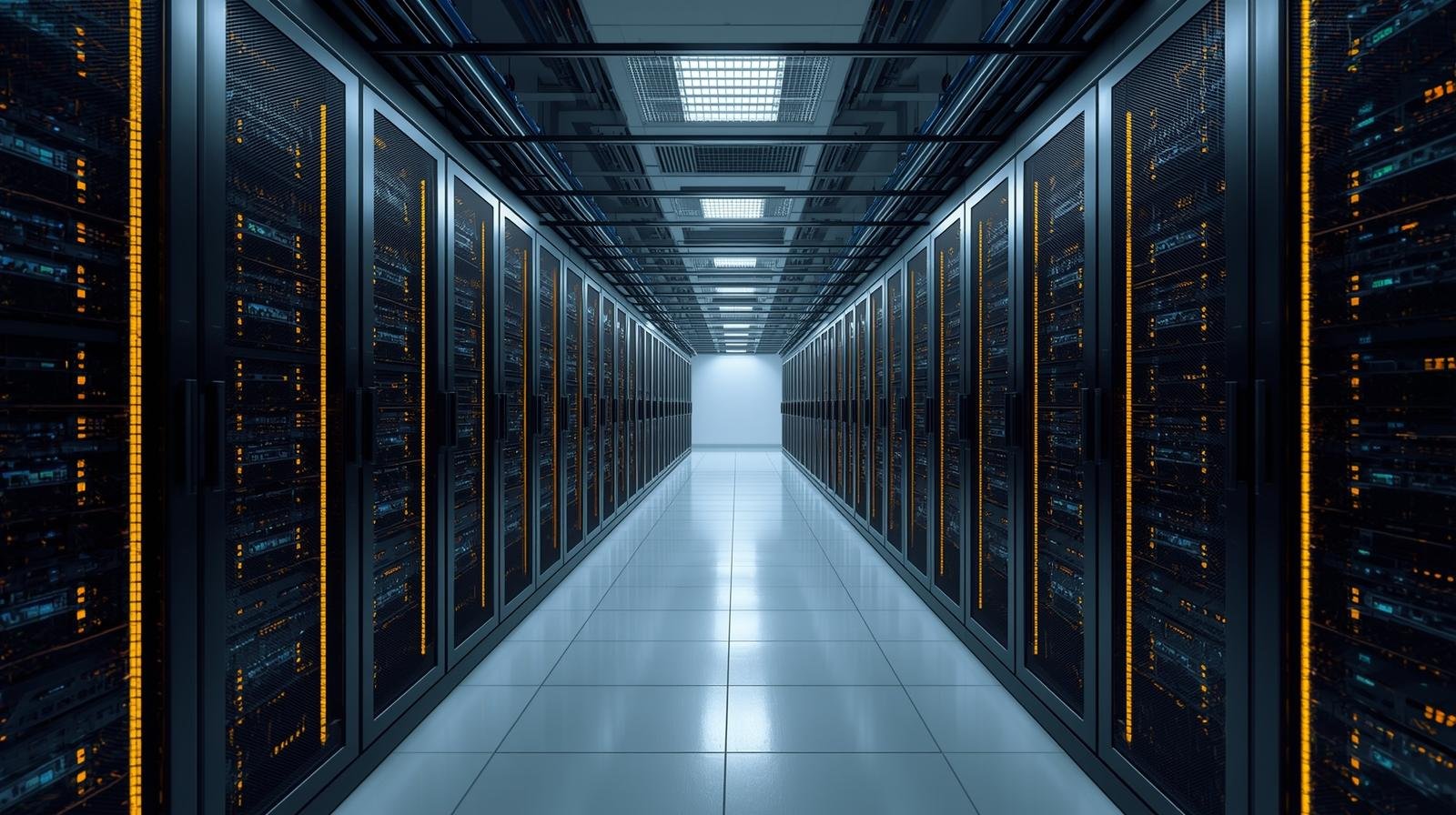
Artificial intelligence isn’t just transforming software — it’s rebuilding the physical world beneath it
Behind every AI model and chatbot lies a staggering wave of capital expenditure (capex) in new data centres — vast, power-hungry facilities springing up across the globe.
This is the biggest infrastructure investment cycle since the dawn of the internet, and it’s reshaping power grids, construction, and even GDP growth.
Here’s what’s happening, why we need it, and why this AI boom looks very different from the internet buildout of the 1990s.
⚙️ Why We Need So Many New Data Centres
Training and running modern AI models requires far more computing power than traditional cloud workloads.
Existing data centres — originally built for web hosting and enterprise IT — simply can’t handle the density, speed, and cooling demands of AI.
Large language models (LLMs) and generative AI systems need:
- Massive GPU clusters running in parallel
- High-speed networking to link thousands of processors
- Extreme cooling systems to manage the heat load
- Reliable, high-capacity power feeds to keep them running 24/7
So instead of expanding slowly, the industry is now in full-scale buildout mode — adding new sites, upgrading old ones, and racing to secure electricity before demand outstrips supply.
🏗️ How Big Is This Buildout?
The scale is astonishing.
- A decade ago, a 30-megawatt (MW) data centre was considered huge.
- Now, many AI-focused campuses exceed 200 MW, with some targeting over 1 gigawatt (GW) of total capacity.
- Deloitte forecasts U.S. AI data-centre demand could increase 30-fold by 2035, reaching 123 GW — roughly equal to the electricity used by 30 million homes.
- Globally, McKinsey estimates around $7 trillion will be invested in data-centre infrastructure by 2030, with 40 % of that in the U.S. alone.
These are no longer “server rooms” — they’re industrial cities built for computation.
🌍 Where Are They Being Built?
The global map of AI infrastructure is taking shape fast:
- United States: Texas, Arizona, Georgia, and especially Northern Virginia (“Data Centre Alley”) lead construction, thanks to strong grids and tax incentives.
- Europe: Scandinavia and Ireland are major hubs, driven by cooler climates and access to renewable power.
- Asia & the Middle East: India, Singapore, and the UAE are expanding rapidly, while Saudi Arabia is planning multi-gigawatt AI data parks.
- Latin America: Brazil and Mexico are emerging as regional anchors.
Some of the world’s largest projects include:
- Meta’s $1.5 billion El Paso AI data centre in Texas
- The $40 billion Aligned Data Centers acquisition, backed by BlackRock, Microsoft, and Nvidia
- Amazon’s $10 billion investment in data-centre capacity across Iowa and Virginia
Together, these projects represent one of the most aggressive build cycles in corporate history.
⚡ Power, Cooling, and the Search for Efficiency
Power is the new bottleneck.
AI data centres consume 10 to 50 times more energy per square metre than traditional facilities.
Electricity and cooling are the twin challenges.
To meet them, operators are experimenting with:
- Liquid cooling systems that circulate coolant directly across chips
- Water-free chillers and closed-loop systems to reduce usage in drought-prone areas
- On-site solar and battery storage to secure stable, low-cost energy
- Microgrids and flexible demand scheduling that shift AI workloads to off-peak hours
Data-centre operators are also becoming major players in the renewable-energy market, signing long-term power-purchase agreements and even funding new wind and solar farms to feed their sites.
💰 How Much It Costs — and How It’s Financed
These mega-projects come with mega-price tags.
The Costs
- Land, power, and construction: Each hyperscale site can cost $5–10 billion to build.
- Hardware: Thousands of GPUs, switches, and networking systems drive costs even higher.
- Cooling and grid upgrades: Custom substations, water treatment, and HVAC systems add hundreds of millions more.
The Financing
Funding comes from multiple sources:
- Big Tech balance sheets – Microsoft, Google, Amazon, and Meta are spending directly from their own cash flows.
- Infrastructure partnerships – BlackRock, Brookfield, and sovereign wealth funds co-invest with tech companies.
- Debt and project finance – Some operators borrow against hardware or land value, much like traditional utilities.
- Lease and co-location models – AI startups rent capacity from data-centre operators rather than owning the facilities.
- Government incentives – Tax breaks, energy credits, and grants are helping attract builds to strategic regions.
This financial layering spreads risk but also interconnects the ecosystem — much like the cross-shareholdings we’re now seeing between major AI players.
📈 Where We Are in the AI Capex Cycle
We’re still early in the investment surge.
- Demand for AI training capacity continues to outpace supply.
- Construction timelines stretch 24–36 months, so firms are building ahead of actual workloads.
- Supply chains for transformers, GPUs, and cooling systems are running flat out.
- Analysts expect peak buildout around 2026–27, before spending gradually shifts from construction to operations.
Right now, we’re in the “accelerate and scale” phase — where every major player is racing to secure capacity before it’s gone.
🇺🇸 The Impact on the U.S. Economy
AI infrastructure has already become a driver of U.S. GDP growth.
- Economists estimate that AI and data-centre capex added over one percentage point to U.S. GDP growth in the first half of 2025.
- Without it, growth would have been almost flat.
- A $100 billion investment in new data-centre projects can generate 500,000 jobs and lift GDP by nearly 0.5 % through construction, equipment, and local supply chains.
It’s an echo of past industrial booms — railroads, electricity, highways — where building the infrastructure became an economic engine in itself.
🌐 Why This AI Boom Is Different from the First Internet Wave
At first glance, the AI buildout looks like a replay of the late-1990s internet bubble.
But this time, the capital cycle is deeper, longer, and far more physical.
| 1990s Internet | 2020s AI Boom |
|---|---|
| Built fibre cables and web servers | Building gigawatt-scale data-centre campuses |
| Low power demand | Massive grid-level electricity needs |
| Funded mostly by equity and VC | Financed through debt, partnerships, and infrastructure funds |
| Rapid consumer adoption drove growth | Enterprise and industrial demand leading the cycle |
| Overcapacity ended the boom | Power constraints could limit AI’s growth |
The difference is simple: the internet connected people, but AI consumes energy.
That makes this not just a tech story — but an industrial, financial, and geopolitical one.
💡 Final Thoughts
The AI revolution is powered not by code alone, but by concrete, copper, and capital.
Data centres are the new factories of the digital age — vast, humming cities where the world’s computation lives.
They will shape everything from global power markets to national productivity growth.
This capex cycle may cool eventually, but for now, it’s the engine room of the AI economy — a reminder that every digital miracle still depends on real-world infrastructure.
Clearly Investments Blog — helping investors understand how technology, markets, and capital work.



0 Comments