Guidance, not advice: this article explains how the rules work today. It is not personal financial advice. If you’re weighing up a big decision — how much to withdraw, when to start, how to pass money on — speak to a regulated financial adviser or a free service like MoneyHelper first.
Here’s the thing nobody tells you when you first access your pension: it’s not tax-free money, it’s tax-deferred money. How and when you take it out can be the difference between keeping thousands of pounds and handing them straight to HMRC.
- Only 25% of your pension is ever tax-free (capped at £268,275) — the rest is taxed as income the moment you take it out (GOV.UK).
- Your first withdrawal is often taxed too heavily on an “emergency” basis — you can fix this, and you can reclaim what’s owed (GOV.UK).
- Your Personal Allowance is £12,570 and the basic rate band runs to £50,270 — frozen until 2031, so more of us get dragged into higher tax bands every year (GOV.UK).
- The full new State Pension is now £12,547.60 a year — that alone uses up almost all of your tax-free Personal Allowance.
- From 6 April 2027, unused pensions will form part of your estate for Inheritance Tax — a genuine rule change that means “leave it in the pension and forget it” is no longer automatically the best plan (GOV.UK).
I want to bust a myth straight away. Your pension isn’t one big tax-free pot. It’s taxed like this:
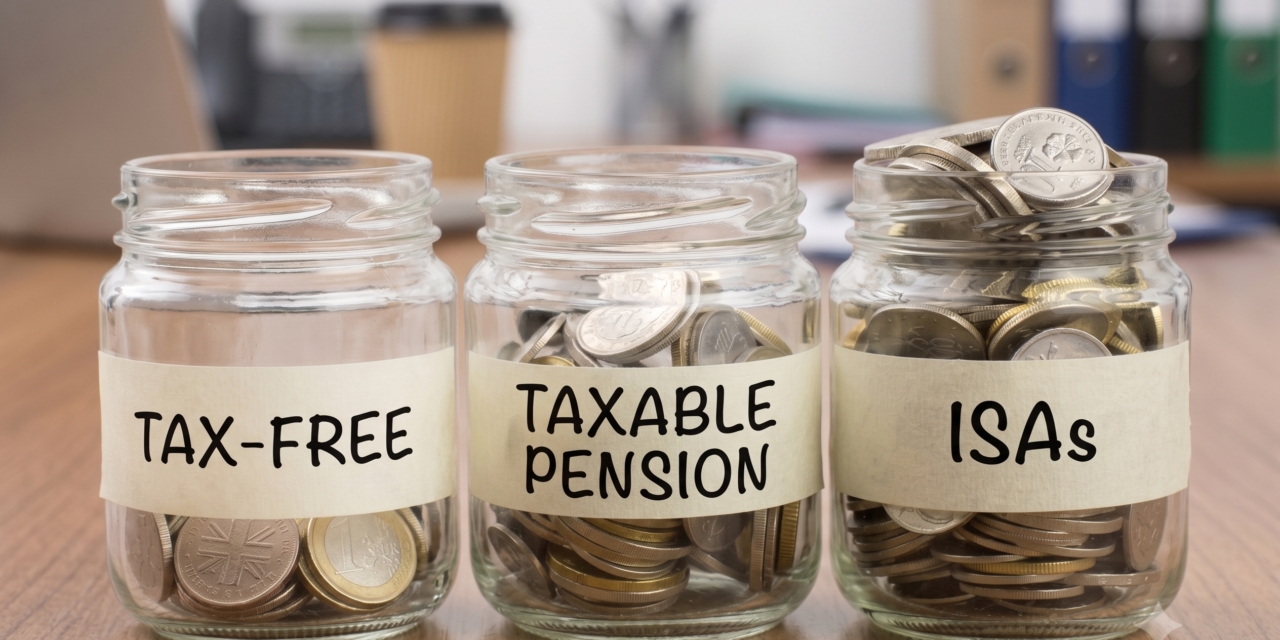
- 25% of it can usually come out tax-free. This is called the Pension Commencement Lump Sum (PCLS), or just “tax-free cash.” You’re capped at £268,275 in total, across all your pensions, this only bites if your pension pots add up to more than £1,073,100.
- The other 75% is taxed as income exactly like a salary, in the tax year you take it out, at whatever rate you’d pay on your total income that year .
- While it stays inside the pension, it grows free of Income Tax and Capital Gains Tax. That’s the whole point of a pension, it’s a tax shelter for your investments, not just your withdrawals.
This matters enormously. Take out too much in one go and you can tip yourself from a 20% taxpayer into a 40% one, on money you didn’t need to touch yet.
Should I take my 25% tax free?
This is the question I get asked more than any other, and the honest answer is: it depends on what you do with it.
Based on the current rules, leaving your money in the pension is usually better, because inside the pension, growth and interest aren’t taxed. Take the same money out and stick it in an ordinary savings account, and any interest above your Personal Savings Allowance (£1,000 for basic-rate taxpayers, £500 for higher-rate, nothing for additional-rate) gets taxed every single year.
But there’s one really good reason to take it out anyway: to fill your ISA. Every tax year you get a fresh £20,000 ISA allowance — money that then grows completely free of tax, for good. Moving your 25% tax-free cash into an ISA keeps it in a tax-free wrapper instead of exposing it to tax in a bare savings account or investment account.
The golden rule: don’t withdraw tax-free cash and then let it sit somewhere it gets taxed. If you’re taking it out, have a plan for where it’s going — ideally straight into your ISA.
You can also take your 25% gradually rather than all in one go, using something called an Uncrystallised Funds Pension Lump Sum (UFPLS) — each withdrawal is 25% tax-free and 75% taxable, so you keep more of the pot growing tax-free for longer.
This is where you can genuinely save yourself thousands, but it takes a bit of planning.
The 2026/27 Income Tax bands are:
| Band | Income | Rate |
| Personal Allowance | Up to £12,570 | 0% |
| Basic rate | £12,571 – £50,270 | 20% |
| Higher rate | £50,271 – £125,140 | 40% |
| Additional rate | Over £125,140 | 45% |
(Source: GOV.UK. These bands are frozen until 2031, and Scotland has its own bands — check MoneySavingExpert’s guide if you’re a Scottish taxpayer.)
Here’s the strategy worth thinking about: withdraw taxable pension income up to the top of a tax band you’re comfortable with — say, staying within the basic rate band — and then use your 25% tax-free cash to top up your spending money on top of that. Because the tax-free portion doesn’t count as taxable income at all, this lets you have more spending power without pushing yourself into the next band.
And don’t forget the State Pension. From April 2026 the full new State Pension is £12,547.60 a year, that’s almost your entire £12,570 Personal Allowance gone before you’ve touched your private pension. Once you’re receiving the State Pension, any private pension income on top of it is far more likely to spill into the 20% or 40% band. Plan your withdrawals around the date your State Pension starts, not just around today’s tax position — what looks tax-efficient now might not be once the State Pension kicks in.
Look at your whole picture before you act. Add up your State Pension, any other pensions, savings interest, and dividends then work out which band the next £1 of pension withdrawal actually falls into. That’s the number that matters, not the headline rate.
Here’s a nasty surprise that catches people out constantly: your first withdrawal often gets hit with emergency tax.
When you take your first flexible payment from a pension, your provider frequently doesn’t have a proper tax code for you yet. So HMRC’s systems tax you on a “Month 1” basis, they assume you’re going to take that same amount every single month for the rest of the year, and tax you as if you’re a much higher earner than you are. A £20,000 withdrawal can be taxed as if you’re earning £240,000 a year. It’s brutal, and it’s very common.
What to do about it:
- Make a small withdrawal first, rather than taking your whole tax-free cash or a big chunk in one go. This triggers HMRC to issue you a proper tax code, so your next, bigger withdrawal is taxed correctly.
- Check your provider’s statement as soon as it arrives, if it looks like far more tax was taken than you’d expect for the year, that’s your cue to act.
- Claim the overpaid tax back, don’t wait for HMRC to sort it out on its own. There are three forms, and which one you need depends on your situation (GOV.UK):
- P55 — you’ve taken part of your pension, left money in the pot, and won’t take more this tax year.
- P53Z — you’ve emptied the pot completely and have other taxable income (a job, another pension, the State Pension).
- P50Z — you’ve emptied the pot completely and have no other taxable income this year.
- Submit online through your Personal Tax Account on GOV.UK, it’s faster than posting a paper form, and refunds are typically paid within weeks rather than months.
If you don’t claim, HMRC will eventually correct things at the end of the tax year, but that could mean your money sits with HMRC for up to 12 months when it could be sitting in your ISA instead.
This is a genuinely big change, and it starts soon: from 6 April 2027, most unused pension funds and death benefits will be brought into your estate for Inheritance Tax purposes. Right now, pensions typically pass to your beneficiaries free of Inheritance Tax. From next year, that protection largely disappears for money still sitting in the pension when you die.
If you want to pass money to family while you’re alive, one option is a two-step move:
- You withdraw money from your pension (paying Income Tax on the taxable 75%, as above).
- You gift some of it to a family member, who pays it into their own pension.
- If you and they pay the same rate of tax, this can be broadly tax-neutral overall — you’ve paid Income Tax on the way out, but they get tax relief added automatically when it goes into their pension. A basic-rate taxpayer who pays in £8,000 sees HMRC top it up to £10,000; a higher-rate taxpayer can claim back even more through their tax return.
But the money you gift doesn’t escape Inheritance Tax. It’s treated under the normal gifting rules: it’s a “Potentially Exempt Transfer,” and it only falls completely outside your estate if you survive 7 years after making the gift. Die within that window and it may still be counted, though “taper relief” can reduce the tax rate (not the value) if you survive at least 3 years.
There are exemptions worth knowing about too: you can gift £3,000 a year completely free of the 7-year rule (with one year’s unused allowance carried forward), £250 per person in small gifts, and — often overlooked — unlimited “normal expenditure out of income,” provided it’s regular, comes from your surplus income (not your savings pot), and doesn’t reduce your standard of living.
- Add up your total expected income for this tax year — State Pension, private pension, savings interest, dividends, everything — and see which tax band the next pound would fall into before you withdraw anything.
- Decide what your 25% tax-free cash is actually for. If you don’t need it for spending now, either leave it growing tax-free inside the pension, or move it straight into your £20,000 ISA allowance, don’t let it sit taxed in an ordinary account.
- If you’re taking regular income, aim to stay within a tax band you’re comfortable with, then use tax-free cash to top up spending on top — rather than pushing taxable withdrawals into the next band.
- Factor in your State Pension start date now, not just your current tax position, it will eat into your Personal Allowance and change what “tax-efficient” looks like.
- If this is your first ever withdrawal, take a small amount first to get your tax code sorted before taking anything larger.
- Check your provider’s tax statement as soon as it lands, and if you’ve been overtaxed, submit the right form (P55, P53Z or P50Z) on GOV.UK straight away rather than waiting for HMRC to catch up.
- If Inheritance Tax on your estate is a concern, start planning ahead of April 2027, understand what will and won’t be inside your estate, and think about whether lifetime gifting (within the 7-year and annual exemption rules) fits your circumstances.
- Get this in writing before you act: if any of this touches a six-figure sum, or a decision you can’t easily undo, get a regulated financial adviser to check your specific numbers.
- The emergency tax trap. Don’t panic if your first payment looks wrong, it’s common, fixable, and reclaimable, but you have to act; HMRC won’t chase you to give your money back faster.
- Tax-free cash isn’t tax-free forever once it leaves the pension. Move it into a taxed savings account and you could be paying tax on the interest every year from then on, the “tax-free” label only applies to the withdrawal itself.
- Breaching your Lump Sum Allowance. If your total pensions are worth more than £1,073,100, you can’t just take 25% of everything you’re capped at £268,275 in tax-free cash across the lot .
- The pension recycling rule. Deliberately taking your own tax-free cash and paying it straight back into your own pension to double up on tax relief is specifically targeted by HMRC, with penalty charges of up to 55% . Gifting to a family member’s own pension is a different thing entirely but keep records showing it was a genuine gift, not a workaround.
- The 2027 Inheritance Tax change isn’t finalised in every detail yet. The Finance Act 2026 received Royal Assent in March 2026, but secondary legislation is still being worked through, check for updates before making irreversible decisions.
- This is guidance, not advice. Everyone’s tax position is different, your marginal rate, your other assets, your family circumstances. Use this article to ask the right questions, not as a substitute for personal advice on anything significant.
All figures correct for the 2026/27 tax year (from 6 April 2026) and apply to England, Wales and Northern Ireland unless stated. Scotland has different Income Tax bands.