🌟 Tech Strength vs Geopolitics: Jobs Data Keeps the Rally On Track
It was a week where strong company earnings and a punchy US jobs report kept global shares grinding higher, even as tensions in the Middle East and the Strait of Hormuz re‑appeared on investors’ radar. Big US tech once again did the heavy lifting, helping the S&P 500 and Nasdaq close at fresh record highs, while Europe and the UK lagged as rising oil prices and politics weighed on sentiment. Emerging markets cooled after a strong run, and China’s market paused for breath around recent highs. For UK DIY investors, it was another reminder that market leadership remains overseas, but opportunities at home are slowly building as the FTSE trades below global peers
📈 Weekly Scoreboard
| Index | Weekly Change (%) | Current Level |
|---|---|---|
| S&P 500 | +2.3% | 7,398.93 |
| Nasdaq Composite | +4.5% | 26,247.08 |
| EURO STOXX 50 | +0.5% | 5,911.53 |
| FTSE 100 | -1.4% | 10,233.07 |
| Nikkei 225 | +5.4% | 62,713.65 |
| MSCI Emerging Markets | +6.9% | 1,711.25 |
| China — SSE Composite | +1.7% | 4,179.95 |
US weekly figures are from AP; Europe, UK, Japan, EM and China use reported closing data and week-on-week closes where available. (AP News)
🌍 Global Drivers
- Strong US jobs data reassured investors that the global economy is still growing, supporting company profits and keeping the equity rally alive despite worries about higher interest rates for longer.
- Corporate earnings season remained positive for markets, especially in US technology and AI‑linked names, where better‑than‑expected profits helped justify recent share price gains.
- Geopolitical tensions in the Middle East, particularly renewed clashes in the Strait of Hormuz, pushed oil prices higher and introduced bouts of intraday volatility as investors weighed growth against inflation risks.
- In bond markets, long‑dated UK gilt yields hovered near multi‑decade highs, signalling that investors still demand a higher return to lend to governments amid worries about debt and inflation over the long term.
🇬🇧 UK Corner
- The FTSE 100 fell for a third straight week, ending at 10,233.07, while the more domestically focused FTSE 250 rose 1.7% on the week. That split tells you global oil, banks and overseas earners hurt the FTSE 100, while UK mid-caps found some support.
- Bank of England policy remains difficult. Bank Rate is 3.75%, with inflation still above target at 3.3%, and the next decision due 18 June 2026. The market is learning that higher energy prices can delay rate cuts, even if growth looks fragile. (Bank of England)
- UK construction looked weak. The April Construction PMI fell to 39.7, well below the 50 level that separates growth from contraction, showing higher costs are still biting. (PMI)
🏦 Asset Movers
- Pound: GBP/USD ended around $1.356, modestly firmer over the week. Sterling was helped by falling gilt yields after Keir Starmer said he would stay on as Prime Minister despite Labour’s local election losses.
- Oil: Brent closed near $101.29, down 6.4% on the week. Lower oil helped the rally, but prices remain high enough to keep inflation risks alive.
- Gold: Gold rose 1.95% to $4,720.40, showing investors still want insurance against geopolitical risk, even while equities are rallying.
📰 Key Headlines
- US payrolls beat expectations. The economy added 115,000 jobs in April, keeping recession fears in check but reducing the case for near-term rate cuts.
- S&P 500 and Nasdaq hit records. AI optimism and strong earnings pushed US markets higher despite war-related uncertainty.
- Global equity funds saw inflows for a seventh week. Investors added $4.35bn to global equity funds, with technology funds attracting $2.83bn.
- UK markets digested political uncertainty. Sterling and gilts rose after Starmer said he would remain in office following heavy local election losses.
- US-Iran tensions flared again. Fresh Gulf clashes tested the ceasefire and kept oil volatility high.
- US consumer sentiment hit a record low. The University of Michigan sentiment reading fell to 48.2, showing households remain worried about prices and energy costs.
📑 Companies Reporting
| Company | Result summary | Market impact |
|---|---|---|
| AMD | Forecast Q2 revenue above expectations on strong AI chip demand. | Shares jumped, helping trigger another AI-led rally. |
| HSBC | Reported a surprise $400m loss linked to a UK mortgage lender collapse. | Shares fell around 6%, weighing on the FTSE 100. |
| Shell | Q1 adjusted earnings rose to $6.92bn, beating expectations, and dividend was raised 5%. | Solid result, but energy shares remained tied to oil volatility. |
| Toyota | Warned of a $4.3bn hit from Iran-war-related costs and disruption. | Highlighted how geopolitics is feeding into company margins. |
| Disney | Beat earnings and revenue expectations. | Helped support the view that US consumers are still spending. |
| Uber | Forecast stronger-than-expected Q2 bookings. | Shares rose about 7%. |
| Cloudflare | Revenue outlook disappointed and job cuts were announced. | Shares sold off sharply as AI expectations met valuation reality. |
| IAG | Warned annual profit would be hit by soaring jet fuel costs. | A reminder that oil above $100 is painful for airlines. |
⚖️ Investor Sentiment
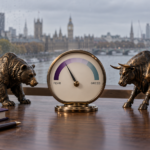
The VIX, often called Wall Street’s “fear gauge”, drifted lower towards the mid‑teens, suggesting markets are relatively calm despite the noisy headlines. At the same time, CNN’s Fear and Greed Index has swung from deep “fear” territory a few weeks ago to around the “greed” zone near 70, indicating that investors are once again more focused on upside than downside.
AAII’s recent commentary and the strong run in equities point to a clear tilt towards optimism, with more retail investors identifying as bullish than bearish compared with the panic seen earlier in the year. Taken together, these signals point to a Risk‑On backdrop: volatility is subdued, optimism is climbing, and price action is confirming the mood.
Fund‑flow reports for the week show money continuing to move into US equity and technology funds, while flows into emerging markets cooled after a strong recent run, and bond funds saw mixed demand as investors balanced higher yields against rate uncertainty. For DIY investors, this tells us that the crowd is leaning back into risk, especially in growth and tech, but is not yet abandoning bonds or defensive assets.
📅 Next Week’s Radar
- Tuesday 12 May, 13:30 UK — US CPI. This is the big one. Markets want to know whether higher oil is feeding into inflation. (Bureau of Labor Statistics)
- Wednesday 13 May, 13:30 UK — US PPI. Producer prices will show whether company cost pressures are rising before they hit consumers. (Bureau of Labor Statistics)
- Thursday 14 May, 07:00 UK — UK Q1 GDP and March GDP. This will test whether the UK economy is still grinding forward despite higher costs. (GOV.UK)
- Thursday 14 May, 13:30 UK — US retail sales. The key question: are higher petrol prices starting to hurt US consumers? (Census.gov)
- Thursday 14–Friday 15 May — Trump-Xi summit. Trade, tariffs and supply-chain access could move China, EM and global industrial shares. (Reuters)
⚡ The Final Take
This was a good week for growth assets, especially AI, Japan and emerging markets. But it was not a clean “everything rally”: UK large caps struggled, oil remained a live inflation risk, and investors are still buying bonds alongside equities.
© Clearly Investments Ltd. Educational information only. This is not investment advice.