PERSONAL FINANCE | FEES AND CHARGES
Understanding investment fees
Knowing what investing costs helps you keep more of your returns. Add up the charges in pounds, check what you receive in exchange and choose a service that suits the way you invest.
WHY IT MATTERS
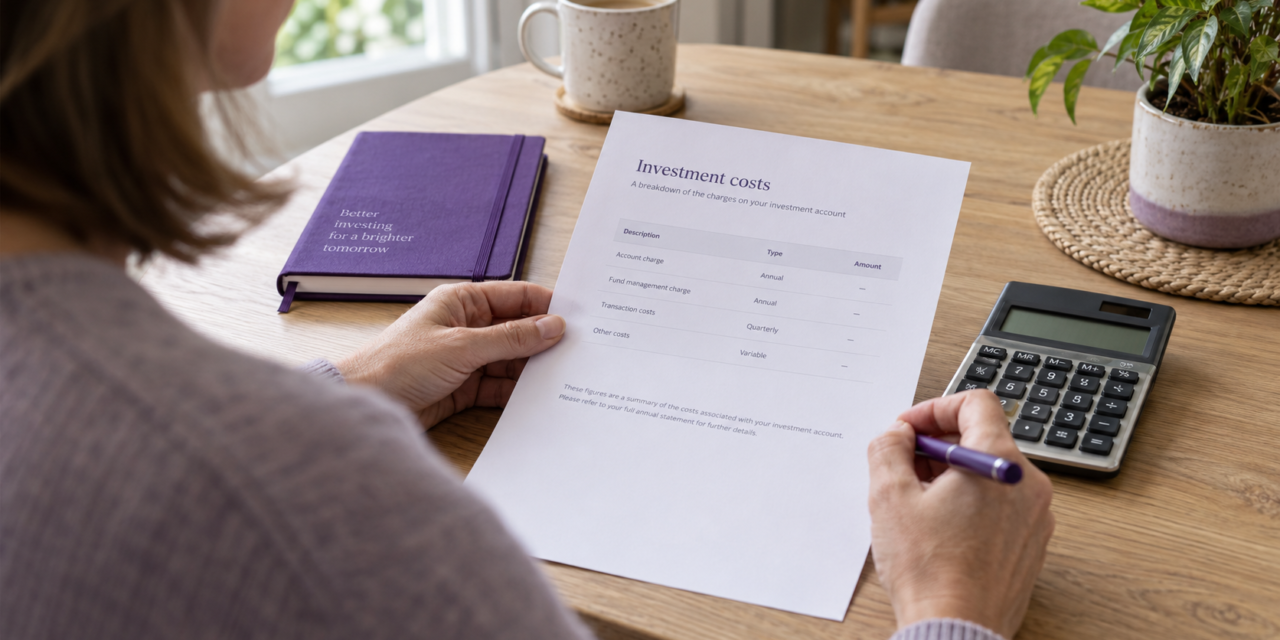
An annual charges statement can make uncomfortable reading, especially when a percentage becomes a large sum.
Fees matter, but the decision to invest also depends on when you’ll need the money and how much risk you can afford. The aim is to understand what will come off your returns and avoid paying for things you don’t need.
THE FEES TO CONSIDER
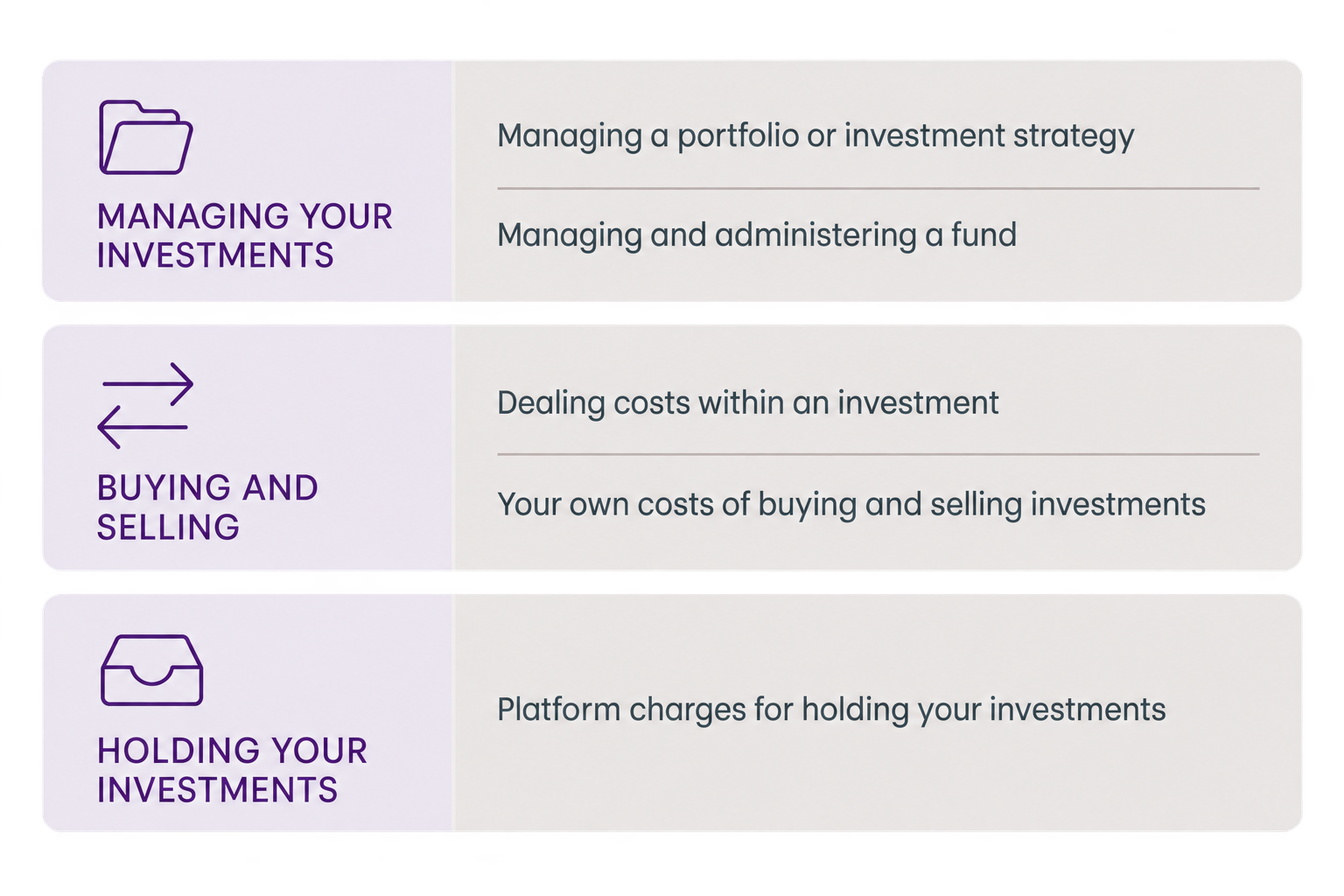
Your total cost can include several charges:
- Platform charges for holding and administering your account.
- Fund costs for running the investments, including ongoing charges and trading within the funds.
- Dealing and currency costs when you buy, sell or convert money, plus spreads and any transaction taxes.
- Portfolio management fees for choosing and managing your mix of investments, either through a discretionary manager or within a ready-made fund.
- Advice and other charges, such as financial planning, pension administration or exit fees.
You won’t necessarily pay every charge. Some providers combine them, so check what each quoted figure includes before adding it to your total.
UNDERSTAND | WHAT ARE THE DIFFERENT FEES I WILL PAY?
Platform charges
An investment platform lets you buy and hold investments, often within an ISA or self-invested personal pension (SIPP). Its charge pays for administering your account and providing that service.
The fee might be a percentage of your investments, a fixed monthly subscription or a combination of the two. Minimum charges can make a percentage platform expensive for a small account; caps and lower rates on larger balances can make it cheaper as your portfolio grows.
Read the charging schedule for the investments and account you intend to use. A provider might cap charges for shares and exchange-traded funds (ETFs), but apply different terms to other funds. Check whether one subscription covers several accounts and whether a pension brings extra administration or withdrawal charges.
A platform fee is only one part of the cost. Fund charges and dealing fees may come on top. Check the interest paid on uninvested cash too, because a low cash rate can reduce the value you receive.
Fund and investment charges
Funds charge for managing the portfolio and running the fund. Look for the ongoing charges figure, usually shortened to OCF, in the fund’s information documents.
The OCF includes the fund management fee and routine operating expenses. Don’t add the management fee to the OCF again. Fund managers normally take these costs from the fund itself, so they affect its price without appearing as a separate debit from your account. Legal & General’s explanation of fund charges.
The OCF doesn’t cover everything. Check for:
- Transaction costs inside the fund: the costs of buying and selling its investments. These can arise even if you never trade your own fund holding.
- Performance fees: some funds take an extra fee when specified performance conditions are met.
- Entry or exit charges: check the terms, including any adjustments intended to cover the trading costs caused by investors joining or leaving.
- Other product expenses: specialist funds can incur additional costs, such as interest on borrowing. Check the fund documents for costs outside the OCF.
For a fund that invests in other funds, check which underlying costs the quoted figure already includes. The same fund can also have different versions, called share classes, with different charges.
Direct shares and gilts don’t have a fund management charge, although platform and trading costs can still apply.
Trading and foreign exchange costs
Dealing charges depend on how often you trade and the size of each order. Suppose a platform charges £5 per purchase: that’s 5% of a £100 investment, but 0.5% of a £1,000 investment. Regular investment plans sometimes offer cheaper dealing, which can help when you contribute small amounts each month.
Also check the bid–offer spread, the gap between the price at which you can buy and sell. It’s a trading cost even though you won’t receive a separate bill for it.
Foreign exchange charges apply when a provider converts your money between currencies. A hypothetical 1% conversion charge costs £100 on £10,000; another conversion when you sell can create a further charge. Depending on the provider, overseas dividends can also trigger conversion costs. AJ Bell’s guide to investment costs and risks.
Buying a global fund priced in pounds doesn’t automatically mean paying your platform a currency conversion fee, although currency movements can still affect the investment’s value.
Taxes can add to trading costs. Many purchases of UK shares attract 0.5% Stamp Duty Reserve Tax, with exemptions for certain transactions and investments. That’s £50 on a qualifying £10,000 purchase. HMRC guidance.
“Commission-free” therefore doesn’t necessarily mean cost-free. Read the full tariff, particularly if you trade frequently or buy overseas shares.
Management fees for discretionary portfolios and funds of funds
If someone chooses and manages your investments for you, check how you pay for that work. The charging structure depends on whether you hold a managed portfolio or buy a single ready-made fund.
Discretionary investment management
A discretionary manager can buy and sell investments on your behalf within an agreed investment strategy, without asking you to approve each trade. Their fee pays for selecting investments and keeping the portfolio within that strategy.
This is usually a percentage of your portfolio and can sit on top of platform charges and the costs of the underlying funds. Some services bundle charges or waive certain fund management fees, so ask for the combined figure and whether any applicable VAT is included.
Ready-made funds that invest in other funds
A fund of funds holds other investment funds. You pay for managing the overall fund as well as the costs of the funds it owns, although the provider may reduce or waive some charges.
The published OCF will generally include the relevant ongoing costs of the underlying funds. Don’t automatically add those underlying OCFs again. Check the provider’s explanation of the total. Legal & General explains how underlying fund charges can form part of the OCF.
For example, if a hypothetical fund quotes a total OCF of 0.60%, comprising 0.25% for managing the overall fund and 0.35% in weighted underlying fund costs, you count 0.60% once. Platform fees and transaction costs may still sit outside that figure.
Investment management also differs from personal financial advice. If you pay an adviser separately, add their initial or ongoing fee where applicable and establish what service it covers.
EXAMPLES | WORKING OUT THE TOTAL COSTS
Worked examples at different portfolio sizes
Suppose you hold a portfolio with these illustrative annual charges:
- Platform fee: 0.25%, without a minimum or cap.
- Fund ongoing charges: 0.20%.
- Disclosed fund transaction costs: 0.05%.
- Four deals costing £5 each: £20.
The percentage charges total 0.50% a year, plus £20 for dealing.
The table also shows the effect of adding a separate discretionary management fee of 0.30% a year. For the example, we assume the costs and the management fee includes any applicable VAT. But you should check and confirm your fees, VAT will be payable on certain management fees.
These are combined annual costs, rather than just platform or management fees.
Illustrative combined annual costs
| Portfolio | Without a manager | With a manager |
|---|---|---|
| £10,000 | £70 | £100 |
| £50,000 | £270 | £420 |
| £250,000 | £1,270 | £2,020 |
At £50,000, you pay £125 for the platform, £100 in fund ongoing charges, £25 in fund transaction costs and £20 for your deals: £270 in total. Adding a 0.30% management fee costs another £150, taking the total to £420.
That extra charge pays for the management service. Whether it represents value depends on what the manager provides and whether you need that help.
These are illustrations, not provider quotes or claims that a discretionary service is available at every portfolio size. Calculations assume constant portfolio values and unchanged charges for the year. They exclude advice, performance fees, currency conversion, spreads, taxes on your own trades and other extras; add any that apply to you. Actual fund transaction costs vary.
Understanding your costs and charges statement
Many UK investment platforms fall under the FCA’s investment cost disclosure rules. For services within their scope, firms must generally:
- Give you an estimate of relevant product and service costs before providing the service.
- Provide a personalised annual disclosure of costs actually incurred where they provide an ongoing service for investments they sold or arranged.
- Show the combined costs in money and as a percentage, with an illustration of their effect on returns.
- Supply an itemised breakdown if you request one.
These requirements help you see costs across the service and investments, including relevant charges embedded in funds. Exact requirements depend on the product and service; pensions also have specific disclosure rules.
When the total looks alarming
A statement showing £1,250 of annual costs deserves attention. On a portfolio worth £250,000 throughout the year, that represents 0.5%. You need both numbers to assess it.
An annual costs statement normally records costs already incurred; it isn’t an additional bill. Some charges came from account cash, while fund costs affected the investment’s value. AJ Bell’s statement guide, for example, separates its own charges from fund managers’ charges and explains that the latter are already reflected in investment prices. AJ Bell’s statement guide.
Don’t deduct those fund costs again from performance figures that already include them. Equally, a fund’s published performance usually doesn’t include your separate platform or advice fees, so check what any return figure covers.
Long-term illustrations need context too. A projected reduction in value can include investment growth you might forgo, as well as fees. Check the period and assumptions before treating a large future number as today’s cost.
Ask which charges will recur. An initial advice fee or unusually busy year of trading can make one year’s costs higher than the next.
Changes to disclosure rules
As at 16 September 2026, two developments matter.
New product summaries are being introduced. The FCA’s Consumer Composite Investments regime covers products such as funds and ETFs. Its optional transition began on 6 April 2026, with the regime due to apply fully from 8 June 2027. Providers can therefore use different disclosure formats during the transition.
Under the new approach, the OCF is the headline product cost. Providers disclose explicit transaction costs and one-off charges separately; they no longer have to disclose estimates of implicit trading costs, such as the bid–offer spread, under this regime. Those economic costs can still affect returns. A lower disclosed figure doesn’t necessarily mean the investment has become cheaper.
Wider changes remain proposals. In July 2026, the FCA considered simplifying investment disclosures, including replacing the existing cumulative-cost illustrations with reporting that shows how costs affected returns. It proposes retaining regular disclosure of total costs in pounds and pence and making cash interest information clearer. Whatever they decide, and however they present the information, the important point is you understand how these are arrived at and what this means for you.
ACT | ARE YOU GETTING VALUE FOR MONEY?
Compare value as well as cost
Lower charges leave more of an investment’s return for you, all else being equal. But a low price doesn’t make an unsuitable investment suitable.
Consider what you need from the service. Reliable pension withdrawals and accessible customer support may justify paying more. An investor holding one fund and making regular contributions may have little use for expensive research or frequent-trading features.
Higher fund charges don’t guarantee higher returns. Compare funds with similar objectives and risks, and assess performance after fund costs. If you pay for ongoing advice, check that you receive the agreed service.
Use the Value Assessment Statement
Look on the fund manager’s website for a Value Assessment Statement, often called an Assessment of Value report.
For UK authorised funds covered by these rules, the FCA requires the manager to assess value at least annually. This considers whether charges are justified by the value investors receive, including performance after fund charges, service quality, comparisons with other charges and whether investors benefit as the fund grows. The assessment also considers differences between share classes.
Managers must publish their conclusions for each share class and explain any action taken or planned where charges aren’t justified. You may find this in the fund’s annual report or a separate value report. FCA reporting requirements.
Find your exact fund and share class, then ask:
- Has it delivered against its stated objectives after charges, over a suitable period?
- How does the manager justify its price compared with similar funds or services?
- Could you hold a cheaper share class with substantially the same rights?
- Where the manager identifies poor value, what will change and when?
The requirement doesn’t apply identically to every overseas fund, ETF or investment trust, so don’t assume every investment will publish the same document.
Don’t let a large cost illustration decide whether you invest. Cash suits emergency reserves and money you’ll need soon; for longer-term goals, suitable diversified investments may still make sense after reasonable charges. Leaving money in cash also carries the risk that inflation reduces its buying power.
YOUR NEXT STEP
Find your latest charges statement or request an estimate before investing.
Check the platform fee, fund costs, expected dealing costs and any separate management, advice or other charges. Check for overlaps, then calculate an annual total in pounds.
Compare that total with another service that meets your needs, and read the fund’s latest Value Assessment Statement where available.
Review costs annually and when your portfolio grows or your withdrawals change.
For help with the next decision, read How to select the right investment platform.