PLANNING FOR RETIREMENT
Should You Reduce Investment Risk Before Retirement?
Approaching retirement is a good reason to review your investment risk. How much you reduce it should depend on when you’ll need the money and how heavily you’ll rely on it.
WHY IT MATTERS
Traditionally advisers have told you to reduce the risk of your portfolio before retirement. There are lifestyle funds which do that for you automatically.
But do you need to reduce the risk of all your retirement monies or should money needed for next year’s bills be different from money you might spend in your eighties.
THE SHORT ANSWER
This depends if you are considering an annuity.
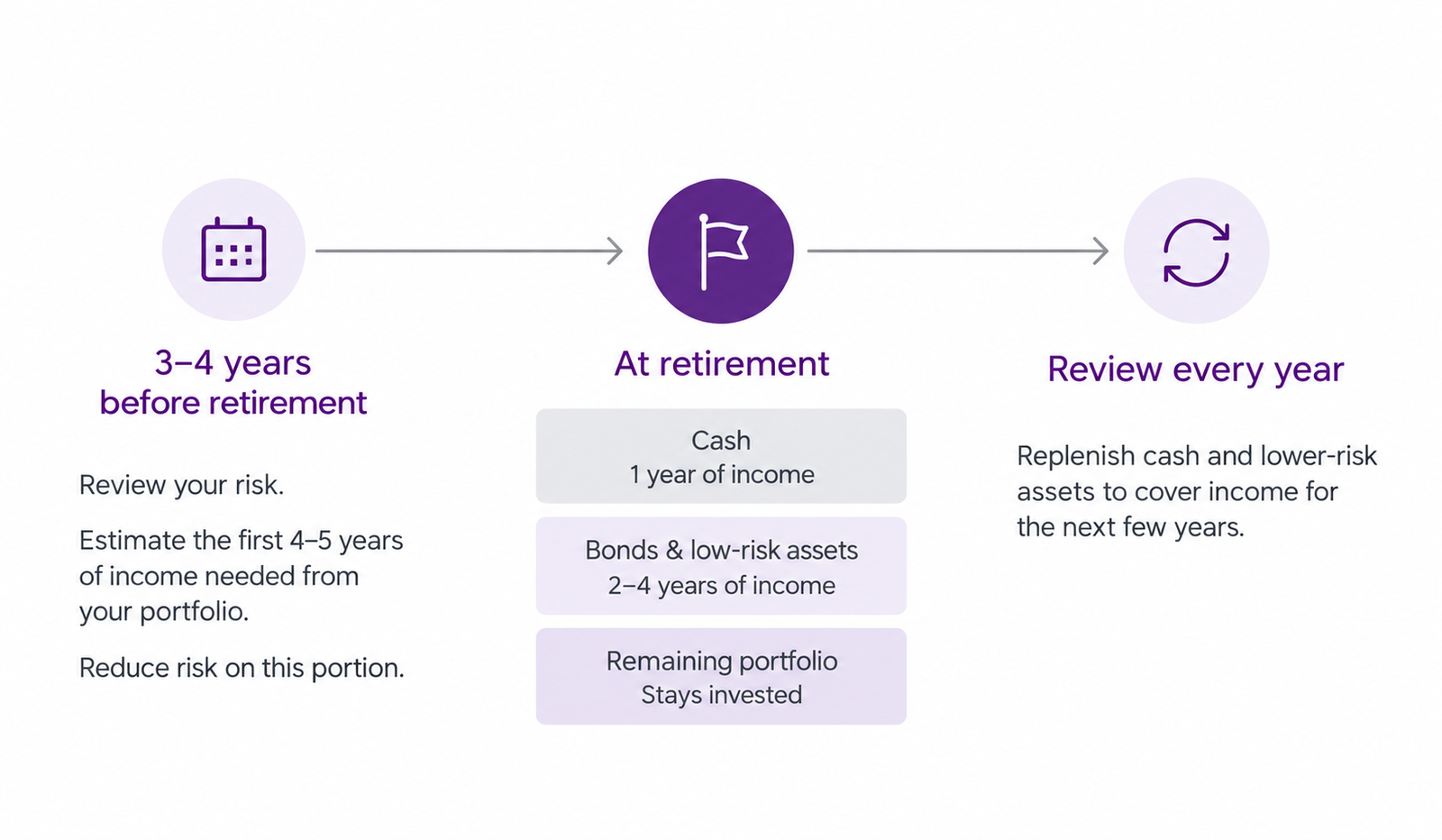
If you are going to retain your monies in your pension, we think you should match the risk to your withdrawals. Work out what you’ll need soon, then decide how much can stay invested for later life.
UNDERSTAND | WHAT CHANGES AT RETIREMENT
Why retirement changes the risk question
While you’re working, your salary usually pays the bills. A market fall hurts, but you may have time to wait for a recovery and continue investing.
Once your savings help pay those bills, a fall can affect how much you can afford to spend.
But the key is this change starts before your final day at work. A fall shortly before retirement could mean revising your leaving date or starting with a smaller income.
But retirement doesn’t give your entire portfolio the same deadline. If you retire at 60, some money may need to support you for another 30 years or more. That portion still needs a plan for long-term growth.
Risk capacity versus investor composure
Risk capacity is your financial ability to absorb losses. If investments fall, can you still pay your essential bills without exhausting your savings or making cuts you can’t afford?
Investor composure is your ability to stay calm and follow the plan. Could you hold your investments through a prolonged downturn, or would anxiety push you into selling?
You might feel comfortable with market falls yet have little financial room for one. Equally, you might have secure pensions covering your needs but find a fluctuating investment balance hard to live with.
This is an important distinction, you may just think about overall risk but it is important to have a distinction between attitude to risk and capacity for loss. Both belong in the decision. There is some useful guidance here MoneyHelper: investing pensions in retirement.
A useful test is to turn percentages into pounds. A 20% fall in a £500,000 portfolio means losing £100,000 of value. Would that change your spending plans? And would you stick with the investments?
One of the biggest retirement risks
Retirement projections often assume a steady average return. The problem is this doesn’t happen.
Sequence risk means that the order of returns matters when you’re taking money out. Poor returns early in retirement can cause lasting damage because withdrawals leave less money invested for a recovery. Charles Schwab’s explanation shows why the same returns in a different order can produce different outcomes once withdrawals begin. Schwab: sequence-of-returns risk.
EXAMPLE: A FALL AND THEN A WITHDRAWAL
A £500,000 portfolio falls 20%, leaving £400,000. You then withdraw £20,000, leaving £380,000.
Your next £20,000 withdrawal would represent about 5.3% of the remaining pot, compared with 4% of the original £500,000. Maintaining the same spending now places greater pressure on your investments.
This example ignores tax, charges and inflation; neither percentage is a recommended withdrawal rate.
Before withdrawals begin, a fall mainly reduces your starting resources. Once withdrawals start, selling investments at depressed prices adds another problem: those investments can no longer participate in a recovery.
Preparing for that possibility before retirement gives you more choices.
DECIDE | MATCH RISK TO YOUR INCOME NEEDS
How much will be withdrawn in the first years?
Start with calculating the income which you require
Planned spending minus income from other sources = the amount your savings must provide.
For example, suppose a household wants to spend £40,000 a year after tax. Existing pensions provide £16,000; another pension starts in year four, raising that income to £28,000.
Five-year withdrawal example
| Retirement year | Other income | Gap to fund |
|---|---|---|
| 1 | £16,000 | £24,000 |
| 2 | £16,000 | £24,000 |
| 3 | £16,000 | £24,000 |
| 4 | £28,000 | £12,000 |
| 5 | £28,000 | £12,000 |
Illustration only. Spending stays at £40,000 in today’s money, and income figures are after tax. These are assumed household amounts, not quoted State Pension rates.
The five-year gap totals £96,000. That doesn’t automatically mean holding £96,000 in cash. It identifies the spending your plan must support.
If taxable pension withdrawals fund the gap, you may need to withdraw more than these amounts to cover Income Tax. ISA withdrawals have different tax treatment. Add the tax calculation before deciding how much to set aside. MoneyHelper: pension drawdown explained.
Include irregular costs, too. A replacement car in year two could matter more than a small change in your annual grocery budget.
Guaranteed income and spending
Two people with identical portfolios can reasonably take different amounts of investment risk.
Someone whose State Pension and defined benefit pension cover essential spending has less immediate dependence on investments than someone funding almost everything through drawdown.
Check when each income starts, whether it rises with inflation and what a surviving partner would receive. Part-time earnings and rental income can help, but they don’t offer the same certainty as guaranteed pension income.
An annuity can convert part of a pension into guaranteed income, reducing the amount you need to draw from investments. Its inflation protection and provision for a partner depend on the options you choose. MoneyHelper: pension drawdown and annuity options.
Spending flexibility also matters. Postponing a £5,000 holiday after a difficult year reduces withdrawals; promising to “spend less” without identifying anything you could cut achieves little.
It is important to consider what you really need and what is discretioanry spending.
Cash, bonds and growth assets in the wider plan
Each part of the portfolio should have a purpose.
Cash can cover upcoming withdrawals. For example, setting aside one or two years of the amount you expect investments to provide can reduce the immediate need to sell shares after a fall.
Cash reserves eventually need replenishing, but this is where the bonds should help.
Bonds can help fund later spending and diversify the portfolio. Here you can consider keeping bonds for the next few years, to support your spending. When thinking about bonds the quality of the issuer of the bond and the maturity dates matter.
Our view is you match the maturity date to your income requirements. For example purchasing government bonds which mature over different years.
Growth assets, including diversified shares, can support spending further into retirement. They bring market risk, but keeping everything in cash creates a different exposure: living costs may rise faster than interest earned.
At an assumed 3% annual inflation rate, something costing £20,000 today would cost about £36,100 in 20 years.
Judge the mix across your pensions, ISAs and other savings together. Cash inside a pension still counts as cash when assessing the household portfolio.
ACT | PREPARE YOUR WITHDRAWAL PLAN
Reduce risk with a plan, not a single age rule
A rule such as “hold your age in bonds” can’t account for your withdrawal needs or the pensions that pay your bills.
Check any automatic pension “lifestyling” strategy as well. This is really important. Think about what happened in 2022, many lifestyling pension funds moved into bonds and the bonds sold off, bringing losses to those people holding these. I met and saw people who expected to retire but the lifestyling funds, just did not do the job required.
Someone buying an annuity soon may need a different approach from someone staying invested through drawdown. MoneyHelper: pension investment choices.
YOUR NEXT STEP
Build your five-year withdrawal map
For each year, record:
- Expected spending, including large one-off costs.
- Other income, after tax, and the dates payments begin.
- The remaining gap, the accounts you’ll use and any withdrawal tax.
- Spending you could postpone.
Then decide how much needs protection from short-term falls and how much can remain invested.